TL;DR: An AI builder is the right call if you're validating an idea, need a digital business card rather than a marketing engine, or have a genuinely small budget. A studio earns its cost once the website has a job to do: ranking in search, converting traffic, connecting to other systems, or carrying a brand that needs to look deliberate. Neither answer is a sales pitch. Read on for the honest version of both.
We're a studio, and we use AI inside our own build process every day. That's exactly why we can tell you when the RM30 a month option is the right one. Most posts comparing AI builders to web designers are written by one side arguing for itself. This one is written by a studio willing to say "use a builder, come back later" when that's genuinely the better answer.
What does an AI website builder actually give you?
Tools like Durable, Wix ADI and Framer AI turn a short prompt into a hosted site. You get an industry template, copy you can edit, a few stock images, and hosting. It costs about RM30 to RM150 a month (roughly USD 10 to 40). Most let you connect a custom domain. Some include basic booking or contact forms.
That's a genuinely useful product for what it's built to do. You get a live site in minutes, not weeks, and you don't need to know anything about code, hosting, or design to get there. The trade-off is control: you're working inside the tool's template logic, its content structure, and its hosting environment, and all three stay fixed unless the tool's roadmap changes them.
What does hiring a studio actually give you?
A studio starts with a conversation about what the site needs to do, not what it should look like. That leads to a custom build where you own the code and content, the layout is planned around how people and search engines move through the site, and you can check its speed yourself with tools like Lighthouse.
You're also paying for a person who's accountable for the outcome, so if a page underperforms, someone diagnoses why and fixes it. That costs more: a studio build typically starts in the thousands rather than the tens, and takes four to eight weeks rather than thirty seconds. What you buy with that time and money is a site built around your business rather than around a template.
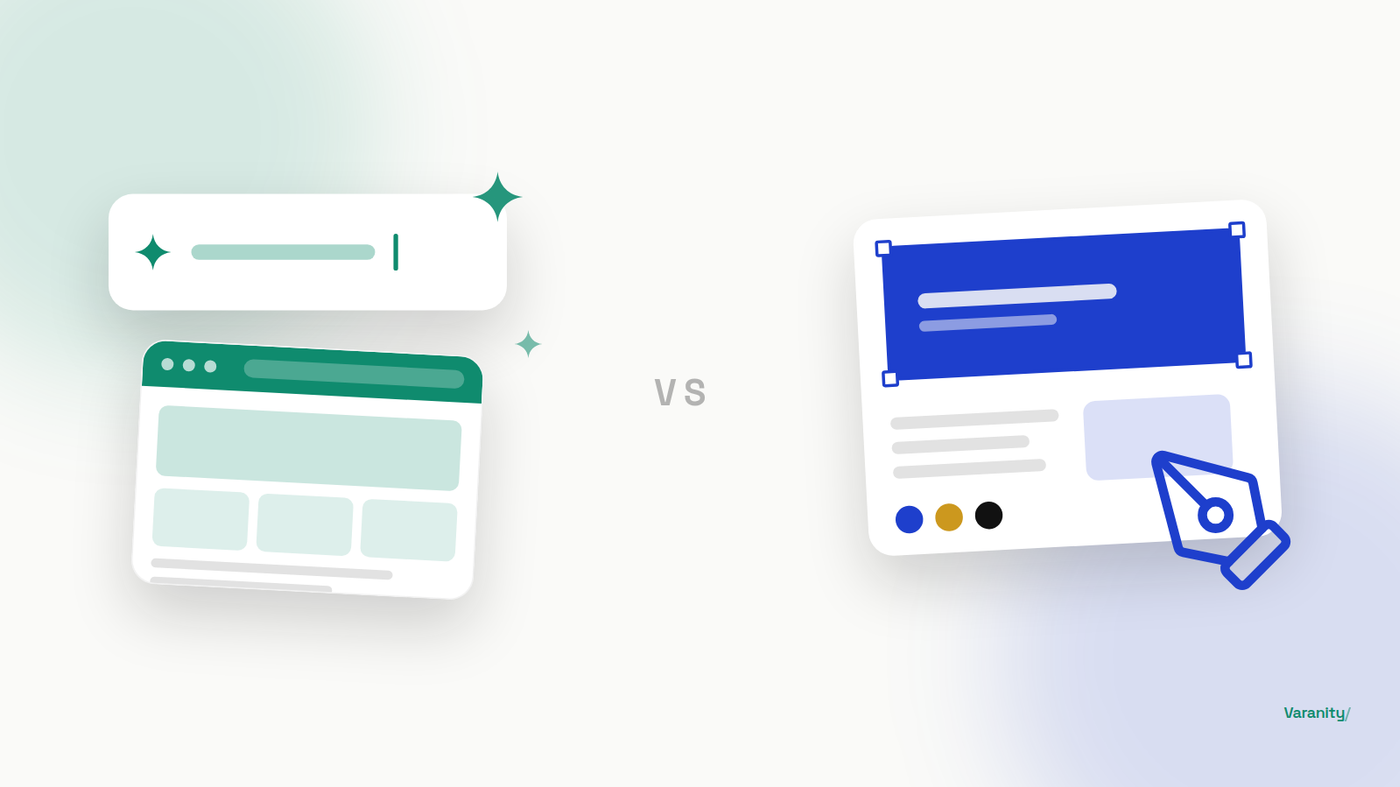
AI builder vs studio: the honest comparison
Comparison | AI website builder | Studio build |
|---|---|---|
Upfront cost | Little to none | Thousands, once |
Monthly cost | RM30–150 | Hosting and optional maintenance, separately scoped |
Speed to launch | Minutes to a day | 4–8 weeks |
Ownership and portability | Usually content only; the site itself often can't be exported | Full ownership of code and content |
SEO ceiling | Limited by fixed URL structure, template markup, and content depth | Architecture built for search from the start |
Core Web Vitals | Varies by builder and template; worth testing the specific tool before assuming either way | Set as a target during the build, measured and reported |
Design uniqueness | Recognisable template patterns across users of the same tool | Built around your brand specifically |
Integrations | Limited to what the builder supports natively | Whatever the business actually needs |
Who does the work | You, with AI generating the first draft | A team accountable for the result |
If you leave | Rebuild from scratch in most cases | You take the code and content with you |
When the AI builder genuinely wins
You're validating an idea and might pivot in three months
If you don't yet know whether the business works, spending on a custom build means spending ahead of the evidence, while a builder gets you live quickly enough to find out.
You need a digital business card, not a marketing engine
Some businesses only need a page that confirms they're real, with an address, a phone number and a short description. If the website's only job is to exist, a template does that job completely.
Your budget is genuinely RM0 to RM100 a month
If that's the real ceiling, a studio build isn't the honest recommendation regardless of how the conversation goes. Use a builder, and come back when the business is earning enough to justify more.
You'd rather launch today than launch properly
There's a real cost to waiting, and sometimes launching today with a template beats launching in six weeks with something better. If that trade-off makes sense for where your business is, take it.
If any of those four situations describes you, don't hire us yet. Use a builder, and come back when the website is earning its keep.
When the builder quietly costs you more
The SEO ceiling
Builders fix your URL structure, limit your control over schema markup, and cap how deep your content architecture can go. That's invisible while the site is small. It becomes the reason a competitor with a properly structured site outranks you once you're both trying to rank for the same commercial terms.
You don't own the site
Most builders let you export your content, not a working copy of the site itself. Leaving means rebuilding, not migrating. Combine that with subscription prices that tend to rise over time, and the "cheap" option can end up being the one with the least flexibility to change your mind later.
Performance you can't fix
Template-based platforms carry shared code, shared scripts, and design patterns you didn't choose, all of which affect how fast the site loads and how it scores on Core Web Vitals. When something's slow, you're limited to whatever settings the builder exposes. There's no engineer you can ask to look under the hood.
Every competitor's site looks like yours
Templates exist because many businesses use them, which is fine at the validation stage. It stops being fine once your site needs to show that this is a serious, established business rather than one still testing the idea.
The real cost maths over three years
A builder at RM100 a month costs roughly RM3,600 over three years, before counting the hours you or your team spend working around its limits. A studio build at around RM8,000 upfront, plus a modest maintenance retainer, is the bigger cash outlay. The gap narrows once you count those hours and the rebuild most growing businesses need when they outgrow a template, so the long-term difference is smaller than the sticker prices suggest.
The hybrid path most posts won't mention
You don't have to pick one option forever. Plenty of businesses start on a builder, prove the idea works and move to a studio build once revenue justifies it. Moving up means bringing your content across and pointing old page addresses to new ones, which keeps the rankings your builder site has earned. Our website migration cost guide explains what that move involves and costs.
This is also where our use of AI in our own process is worth being specific about. AI-assisted means we use AI to speed up drafting, testing, and research inside a build a person is still designing, reviewing, and standing behind. AI-generated, the way a builder works, means the tool is producing the output directly with no one making the underlying decisions. Both use AI. They're not the same thing, and the difference is exactly what you're paying for when you hire a studio instead of a subscription.
How to decide in five minutes
Ask yourself five questions. What's the real monthly budget, not the ideal one? Is the site meant to generate revenue through leads or sales, or is it meant to exist as a reference point? Does the business depend on local or organic search traffic to find new customers? Does the site need to connect to other systems: booking, payments, a CRM, inventory? And honestly, will this business still exist in its current form in twelve months?
If most of your answers point toward "not yet" or "just needs to exist," a builder is the right call today. If most point toward "yes, this needs to perform," the studio conversation is worth having now rather than after a year of a template holding the business back.
Not sure which you are?
If you're not sure which side of this you're on, a conversation will tell you faster than guessing.
Book a discovery call. If a builder is the right answer for where you are right now, we'll tell you on the call.